


In the MIT Siegel Family Quest for Intelligence, our faculty, staff, and students have made remarkable progress in research this year; we're excited to share some of those stories with you. We have new research initiatives on the horizon, and we will share that news later this year.
Research Tools
Modeling How Minds Think About Minds
A new programming language called memo makes it far easier — and far faster — to build computational models of how humans reason about the thoughts, beliefs, and intentions of other people. Essentially, memo is a programming language specialized for reasoning about minds.
This new tool was developed at MIT to address significant challenges, and it has already been adopted by research groups worldwide. By using memo, models can often be both significantly simpler to express, with up to three times fewer lines of code, and dramatically faster to execute and fit to data — in some cases, 3,000 times faster, or more. We're excited to see how this tool will be used throughout the community!
Read the feature here.
Reasoning Robots
Robots That Think Before They Act
TiPToP, a new system developed by the Learning and Integrated Systems Group at MIT, enables researchers to direct robots by using plain language, like "put all the fruit in the bowl" or "wipe the table."
Rather than learning from thousands of hours of robot-specific demonstrations, TiPToP gives robots the ability to reason—to look at a scene, understand a plain-language instruction, build a mental model of the environment, and plan a sequence of actions before moving a single joint.
Read more about TiPToP here.
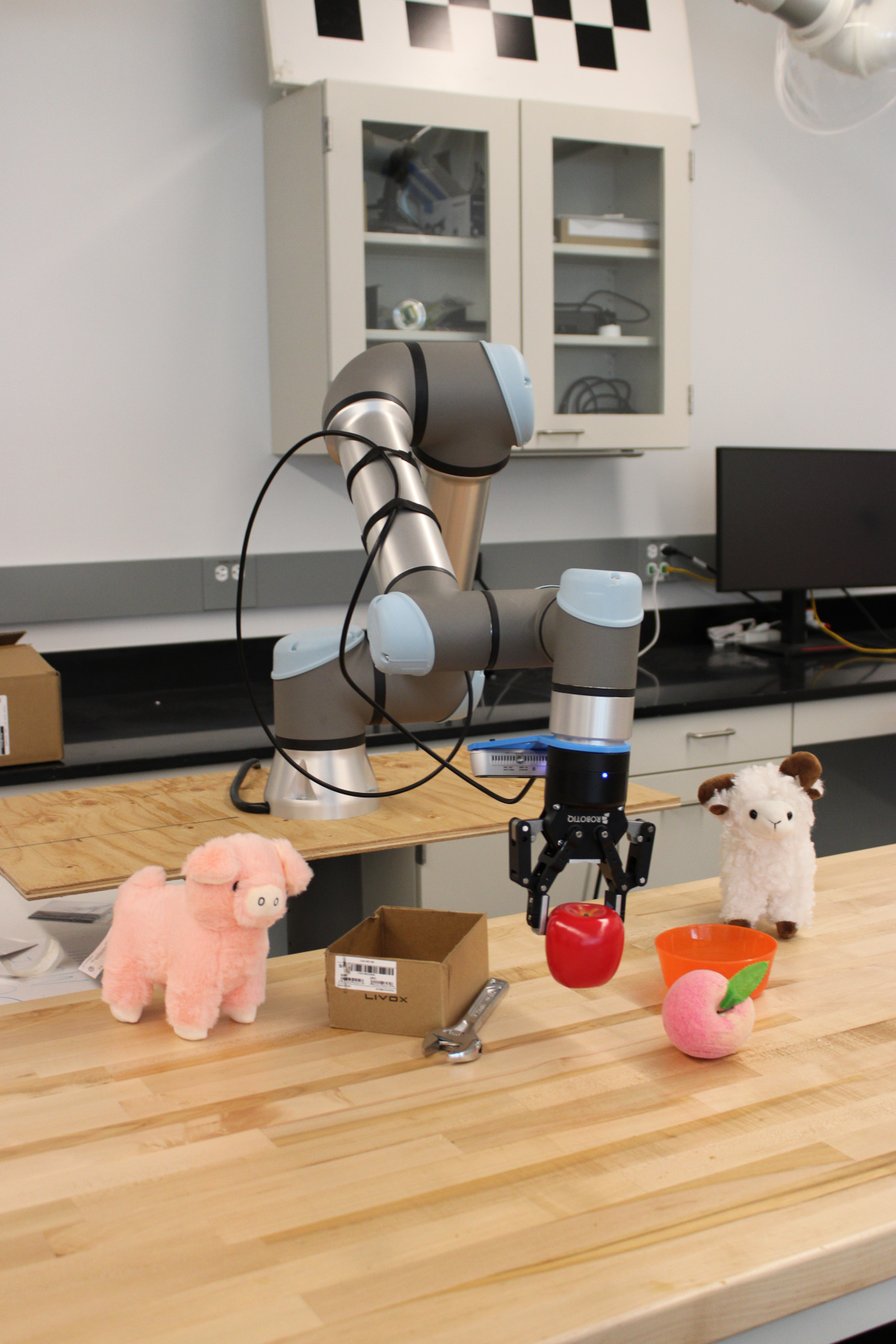
The researchers have used TiPToP to instruct the robot to find an apple and pick it up.
Upcoming Research
How Do Children Reason About Cause and Effect?
Children learn through play: stacking blocks, building sandcastles, and pushing toy cars all provide valuable lessons about interacting with the world around them. However, research shows that some physical cause-and-effect interactions are confusing to children. Researchers in the Development of Intelligent Minds Mission are delving into intuitive physics in young minds.
Learn more in our feature here.
In the Press
"We have the opportunity not only to build more robust and efficient AI systems, but to rebuild the bridge between cognitive science and AI. This is a route to answering the biggest open questions about how human minds work, and with that understanding, making AI that positively impacts mental health, education, and society in ways unlikely to come from machine learning alone."
— Prof. Josh Tenenbaum
Our faculty and researchers publish broadly. Prof. Tenenbaum contributed to the AI & Science issue of Daedalus, from the American Academy of Arts & Sciences. The article and the issue are valuable reading!